Selecting a motor for an automated axis is not simply a matter of choosing the highest torque rating. The motor, drive, mechanical transmission and machine load need to work together.
For machine manufacturers evaluating Stepper Motor and Stepper Drive Solutions, the best starting point is the motion requirement: how far the axis must travel, how quickly it must move, what it must carry and how frequently the cycle repeats.
Define the Motion Profile First
Before selecting a stepper motor, establish the basic axis requirements.
These typically include:
- Moving load
- Required speed
- Acceleration and deceleration
- Travel distance
- Cycle frequency
- Holding requirements
- Mechanical transmission
- Positioning expectations
A motor that appears powerful enough based on static torque alone may not provide the required torque at operating speed.
Stepper motor torque generally changes with speed, making the complete torque-speed requirement more meaningful than a single headline figure.
Motor and Drive Need to Be Matched
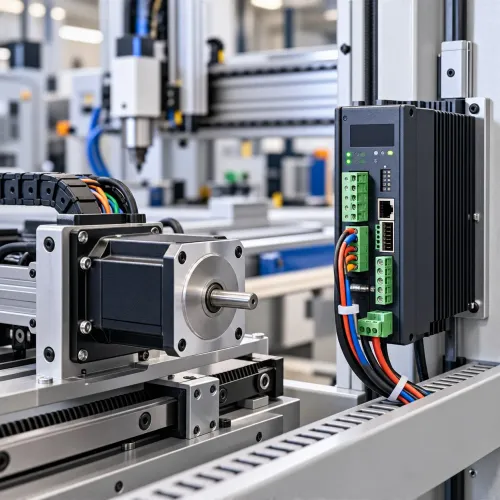
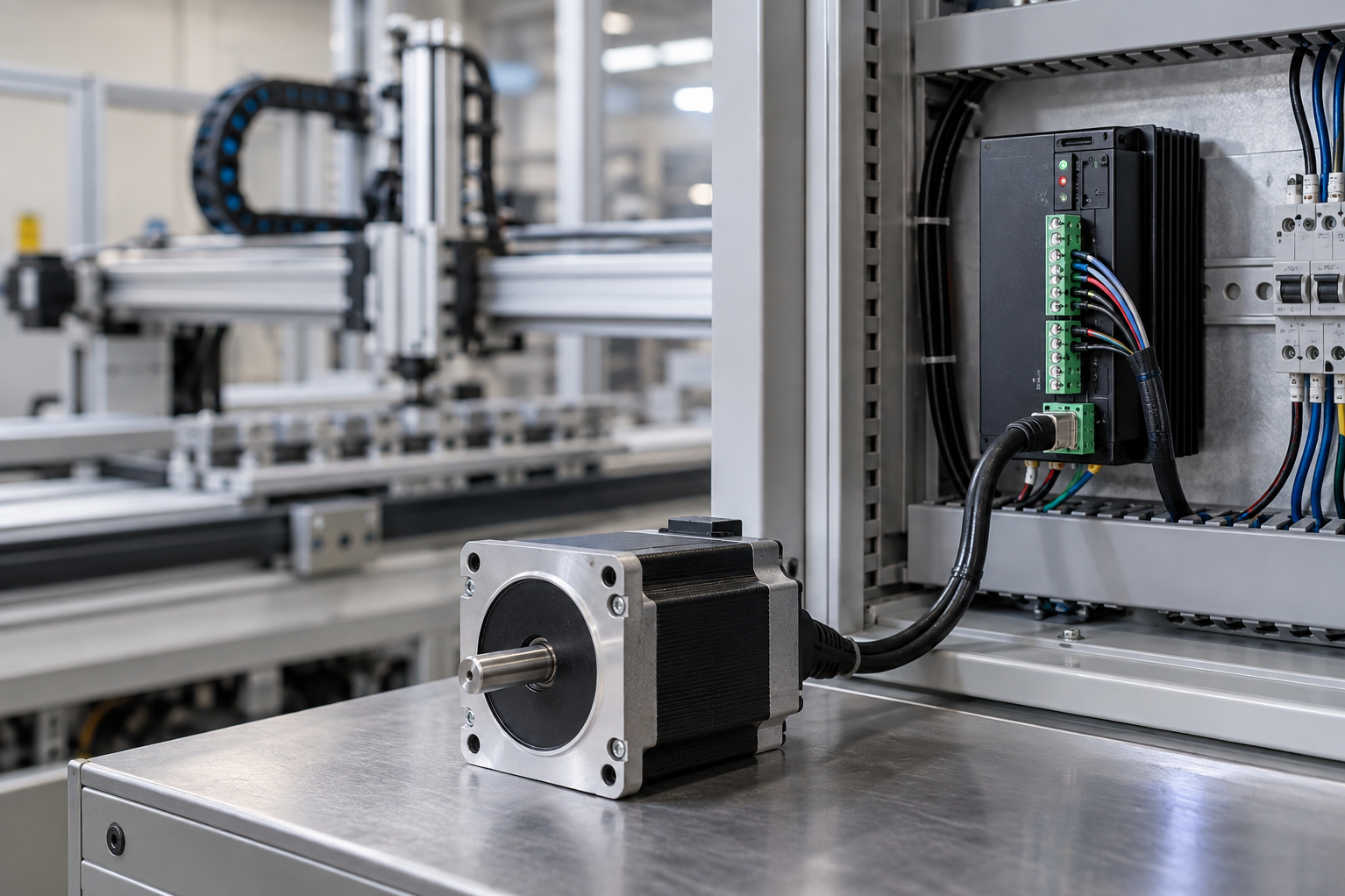
The stepper drive controls current supplied to the motor according to command signals from the controller.
Motor electrical characteristics and drive capability therefore need to be compatible.
Drive selection may involve considerations such as:
- Supply voltage
- Current capability
- Microstepping settings
- Input signal requirements
- Protection functions
- Control architecture
Treating the drive as a generic accessory can limit the performance of an otherwise suitable motor.
Understand What Microstepping Does
Microstepping divides the motor's basic step angle into smaller commanded increments.
It can support smoother motion and reduce some vibration characteristics, but increasing the microstep setting does not automatically produce equivalent improvements in real-world positioning accuracy.
Mechanical backlash, load variation, machine stiffness and motor behaviour all remain relevant.
Microstepping should therefore be selected as part of the complete motion strategy rather than used as a substitute for mechanical accuracy.
Check the Mechanical Transmission
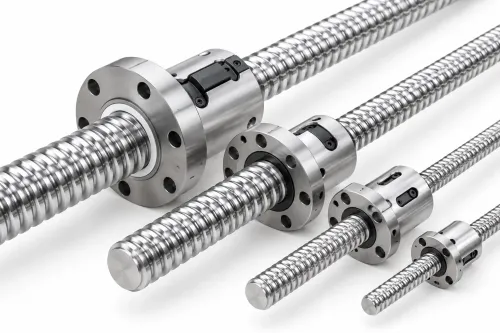
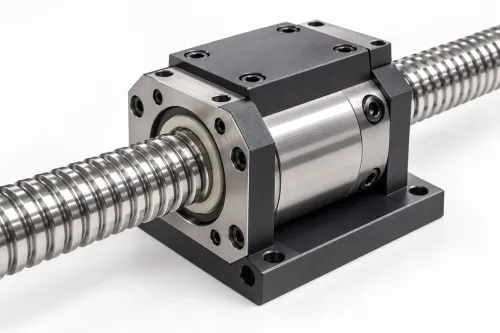
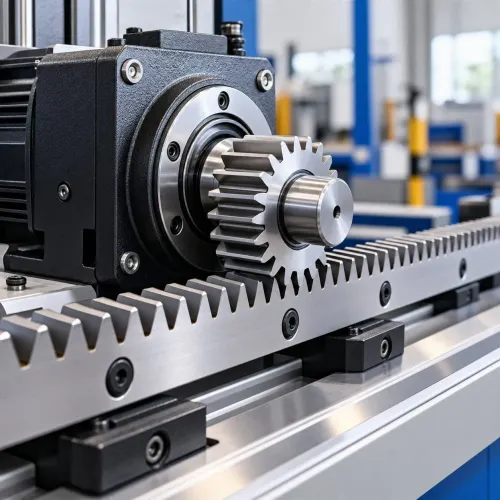
Stepper motors are commonly paired with ball screws, lead screws, belts, rack-and-pinion arrangements or gearboxes.
Each mechanism changes the relationship between motor rotation and axis movement.
For a ball screw axis, for example, screw lead affects linear distance per revolution. The engineer needs to confirm that the chosen combination can achieve both the desired travel speed and usable force.
Avoid Oversizing Without a Reason
Selecting a substantially larger motor may appear to provide a safety margin, but unnecessary oversizing can increase cost, physical size and system requirements.
The better approach is to calculate or estimate the required torque across the intended speed range and apply an appropriate design margin.
This produces a more balanced system.
When a Stepper System May Need Reconsideration
Stepper systems can suit many positioning and automation tasks, but every application should be evaluated individually.
High-speed operation, demanding dynamic performance or applications requiring specific feedback characteristics may lead designers to compare other motion-control approaches.
The decision should come from machine requirements rather than a preference for one motor technology.
Sourcing Stepper Systems in Coimbatore
Coimbatore has a substantial base of machine manufacturers, automation integrators and industrial equipment builders serving customers throughout Tamil Nadu and India.
SSB Industrial Solutions supports B2B requirements involving Stepper Motor and Stepper Drive Solutions and related industrial automation components.
Before requesting a motor and drive combination, procurement teams can improve the selection process by sharing motor mounting requirements, load, speed, transmission mechanism, power availability and control details.
For replacement projects, motor nameplate data and existing drive information are also useful.
A well-selected stepper system is not defined by motor torque alone. It is the result of matching motor, drive, controller and mechanical transmission to the actual motion profile the machine must perform repeatedly.
Keywords