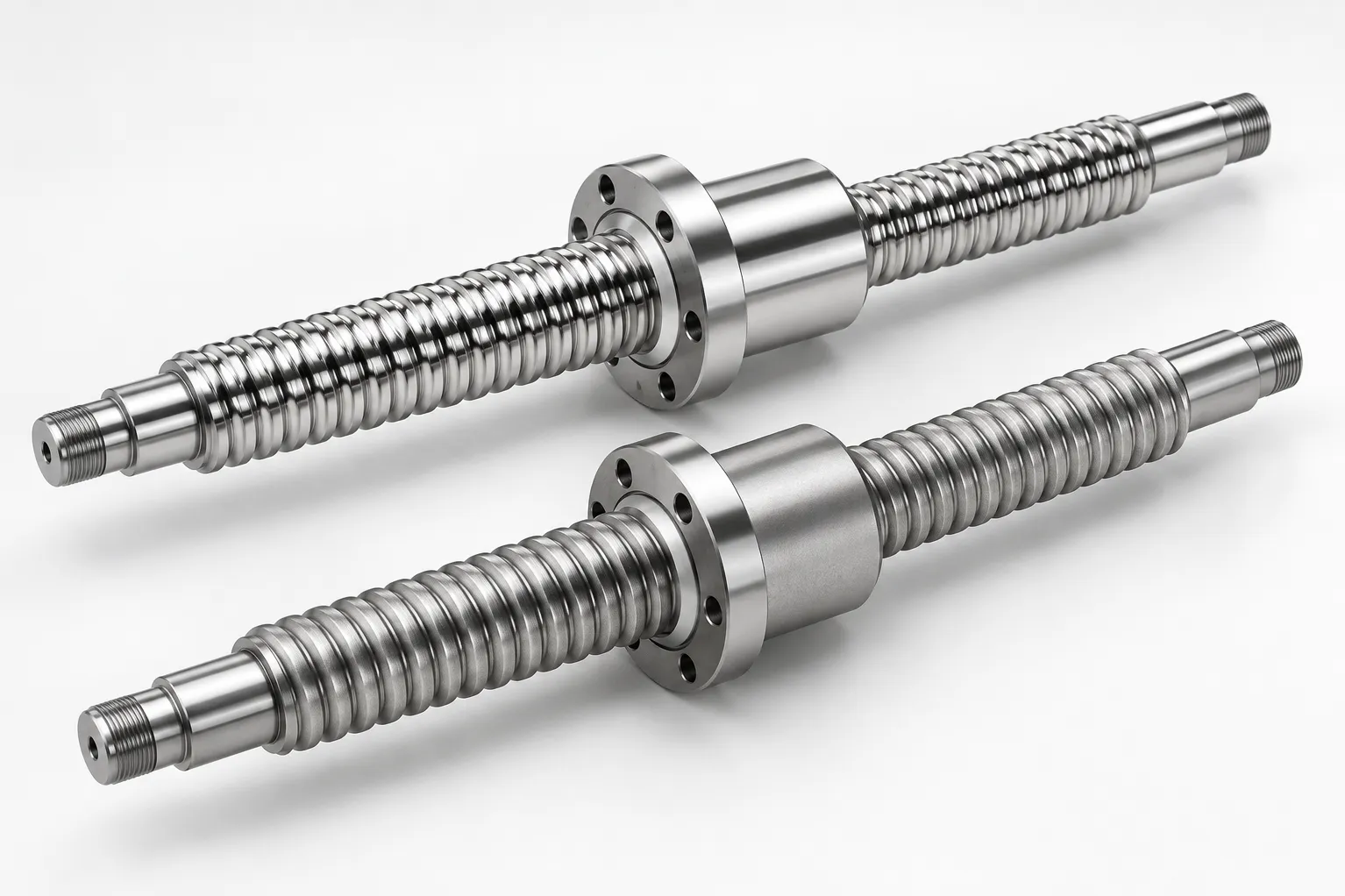
Ball screws are widely used in automated machinery, but not all ball screws are manufactured in the same way. One of the most important distinctions for engineering teams is between ground and rolled designs.
A Ground Ball Screw for Precision Applications is generally considered when demanding accuracy and controlled positioning are important, while rolled ball screws can provide an effective solution for many general industrial applications.
Choosing between them should be based on machine requirements rather than terminology alone.
Understanding the Manufacturing Difference
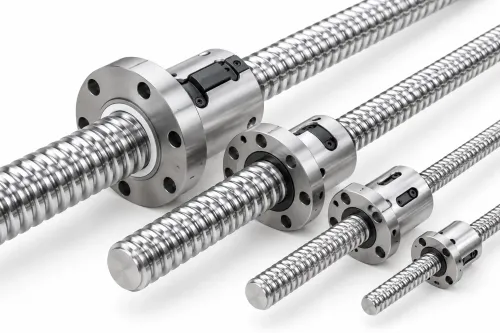
Ground ball screws are produced using precision grinding processes to create the screw raceway geometry.
Rolled ball screws are manufactured through a rolling process that forms the thread profile.
These manufacturing approaches can result in different achievable accuracy characteristics, production costs and suitability for particular machinery.
The key question is whether the machine needs the additional precision associated with a ground screw.
When Ground Ball Screws Make Sense
Applications involving precision positioning may justify a ground screw.
Examples can include:
- Precision machine tools
- Measurement equipment
- High-accuracy positioning stages
- Specialized production machinery
- Equipment with demanding dimensional tolerances
In such applications, errors in linear positioning can influence the process or finished product.
However, the entire axis must support the required accuracy. A precision screw installed on a flexible frame with poor guideway alignment will not independently make the machine precise.
Where Rolled Ball Screws Can Be Practical
Rolled ball screws are used across many industrial applications where the required positioning specification falls within their capabilities.
Potential applications include transfer systems, general automation, packaging equipment and other machinery where extreme positioning accuracy is unnecessary.
Their practical advantage is not that they are inherently 'better' or 'worse,' but that they can offer an appropriate balance between performance and cost for many machines.
Compare Total System Requirements
Before paying for a higher ball screw specification, examine:
- Required positioning accuracy
- Repeatability
- Axial load
- Travel length
- Operating speed
- Duty cycle
- Backlash requirements
- Machine frame rigidity
- Guideway accuracy
- Budget and lifecycle expectations
This prevents component selection from becoming disconnected from machine design.
Accuracy Is a System-Level Result
Industrial engineers occasionally focus on the ball screw while overlooking the rest of the motion axis.
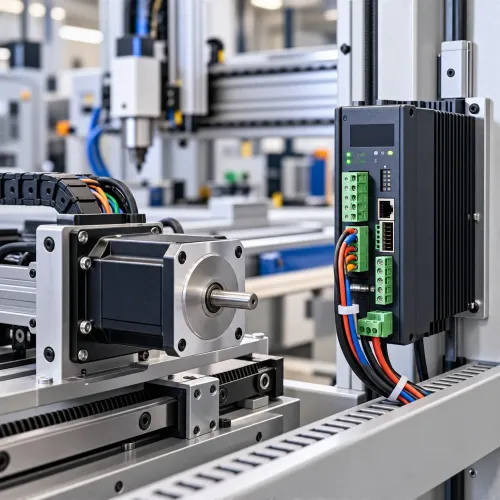
Motor control, bearing supports, coupling alignment, guideway installation, thermal effects and structural stiffness can all influence actual positioning.
For a machine to benefit from a Ground Ball Screw for Precision Applications, these supporting elements need to be designed and assembled accordingly.
Evaluating Cost Against Application Value
Coimbatore manufacturers often build machinery for competitive industrial markets where technical performance and cost both matter.
A ground screw may be justified when machine accuracy contributes directly to production quality, rejection reduction or process capability. In a less demanding positioning mechanism, paying for precision beyond what the process can use may provide limited return.
SSB Industrial Solutions supports machine builders, automation integrators and procurement teams in Coimbatore and other industrial areas of Tamil Nadu when evaluating linear-motion components.
A useful supplier discussion should therefore include application information instead of focusing exclusively on price.
For new machinery, establish the required positioning performance before specifying the ball screw manufacturing class. For replacement requirements, check whether the original machine specification depends on a particular accuracy level before substituting another type.
The best choice is the screw whose accuracy, load capability and operating characteristics match the complete axis. That approach keeps precision purposeful rather than turning it into an unnecessary specification premium.
Keywords