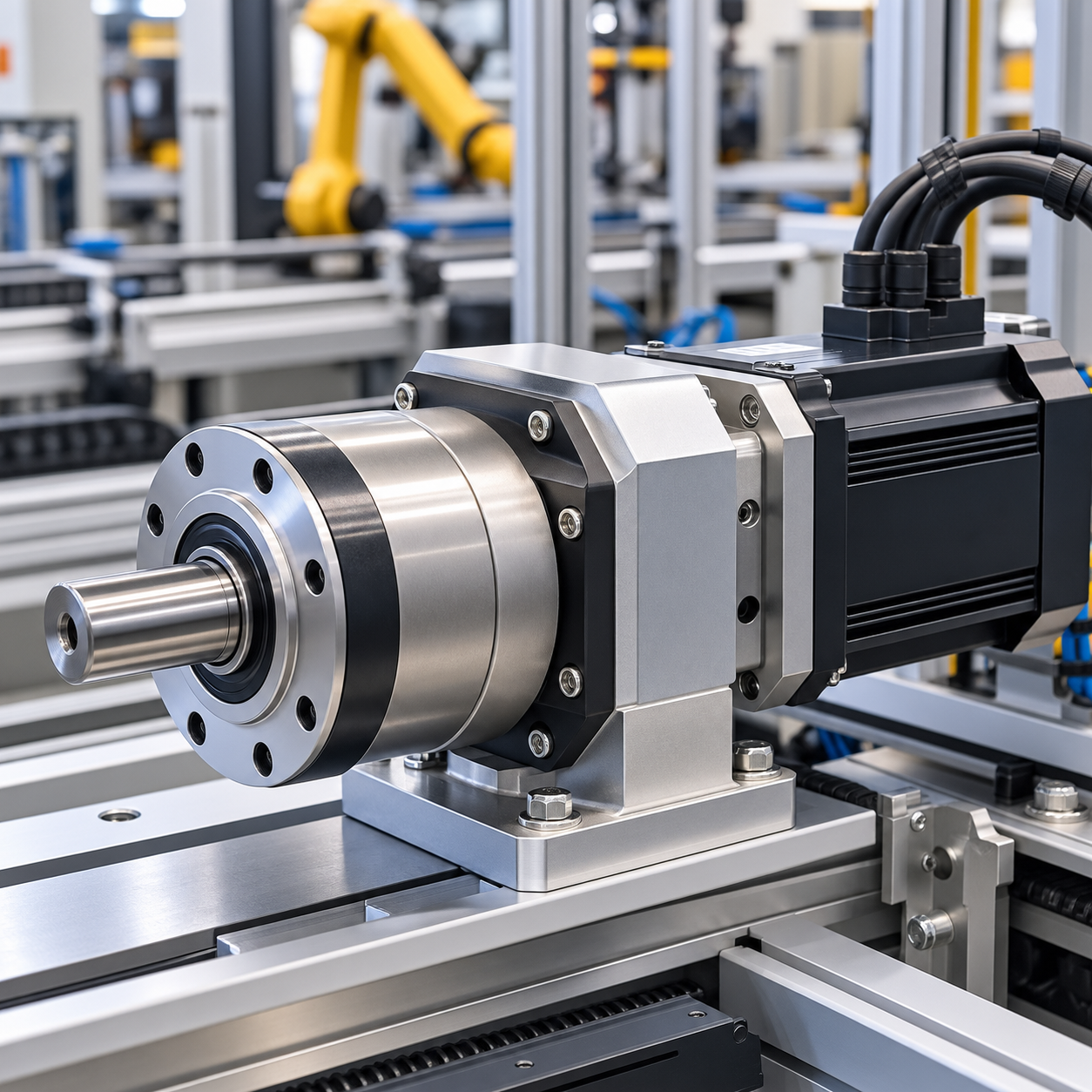
A gearbox can dramatically change how a motor behaves at the machine output. It can reduce speed, multiply torque and help match a motor to the mechanical requirements of an automated system.
When purchasing a Planetary Gearbox for Industrial Automation, procurement teams should look beyond ratio and price. Backlash, output loading, motor compatibility, duty cycle and mounting details can all influence whether the gearbox is suitable.
1. Start With the Required Gear Ratio
The gear ratio determines the relationship between input and output speed.
For example, increasing reduction generally decreases output speed while increasing available output torque within the gearbox's operating limits and efficiency characteristics.
The correct ratio should therefore be calculated from:
- Motor operating speed
- Required output speed
- Motion mechanism
- Cycle time
- Required torque
Selecting an arbitrary ratio and adjusting motor speed later can compromise machine performance.
2. Check Torque Requirements
Gearbox selection should consider operating torque as well as peak or acceleration-related demands.
Industrial machinery may experience short periods of higher load during starting, stopping or process operations.
Procurement teams should obtain the relevant torque information from the machine designer rather than selecting a gearbox based only on motor power.
3. Evaluate Backlash
Backlash refers to mechanical play within the gear transmission.
The acceptable level depends on the application. A general conveyor mechanism and a precision positioning axis may have very different requirements.
Specifying extremely low backlash where it provides no process advantage can add unnecessary cost. Accepting excessive backlash in a positioning system, however, can affect motion accuracy.
4. Check Output-Shaft Loads
A gearbox output may experience radial and axial loads depending on how the driven mechanism is connected.
Pulley, pinion and other arrangements can introduce forces beyond simple transmitted torque.
These loads should be compared with the gearbox's permitted operating conditions.
5. Confirm Motor Compatibility
The gearbox must physically and mechanically integrate with the selected motor.
Important details can include:
- Motor flange
- Shaft diameter
- Shaft length
- Mounting dimensions
- Adapter configuration
- Input speed
For retrofit projects, accurate motor information can prevent costly interface problems during installation.
6. Consider the Duty Cycle
A gearbox used occasionally does not experience the same operating conditions as one running through repeated production cycles.
Operating duration, starts and stops, ambient temperature and load variation should be considered.
For equipment builders in Coimbatore serving continuous-production industries, this becomes particularly relevant.
7. Account for the Working Environment
Industrial gearboxes can operate around dust, heat, moisture and other environmental factors.
The machine designer should evaluate enclosure, sealing and installation requirements appropriate to the facility.
8. Look at the Complete Motion System
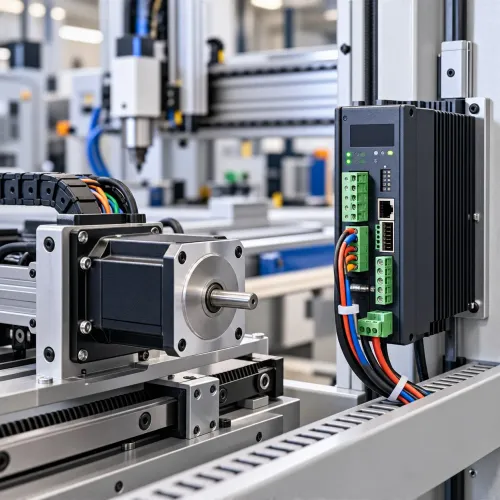
A Planetary Gearbox for Industrial Automation works alongside the motor, drive, coupling and final mechanical transmission.
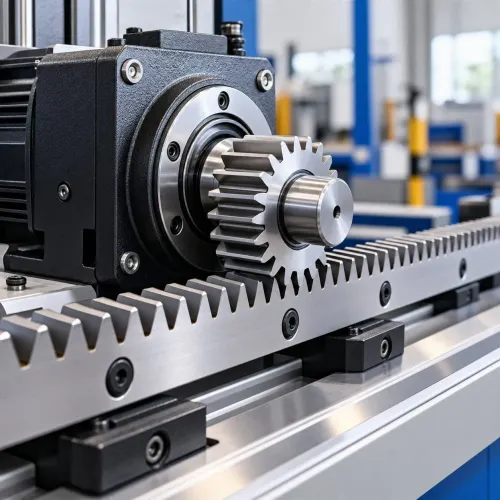
If a gearbox drives a rack-and-pinion system, for instance, the pinion diameter and reduction ratio together determine the relationship between motor rotation and linear travel.
System-level calculation is more useful than isolated component selection.
Industrial Component Selection in Coimbatore
SSB Industrial Solutions supports machine manufacturers, industrial engineers and automation integrators sourcing motion components in Coimbatore and across Tamil Nadu.
Before finalizing a planetary gearbox, a buyer should ideally have the required ratio, motor details, operating torque, peak load, output configuration, backlash requirement and duty cycle available.
A well-chosen gearbox can help the motor operate within a more suitable range while delivering the speed and torque required at the machine. That makes technical compatibility and operating conditions far more important than selecting a gearbox solely because its ratio appears correct.
Keywords