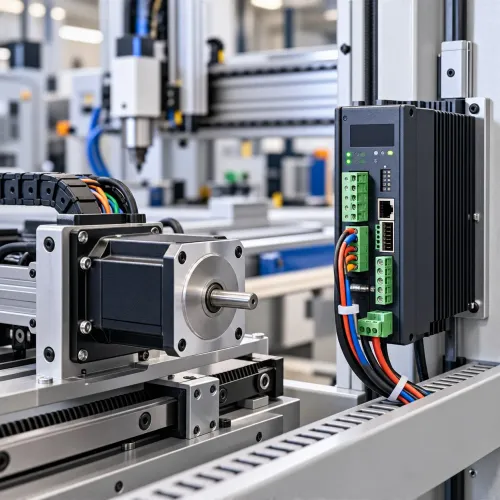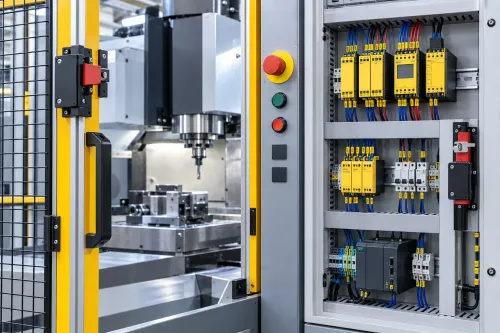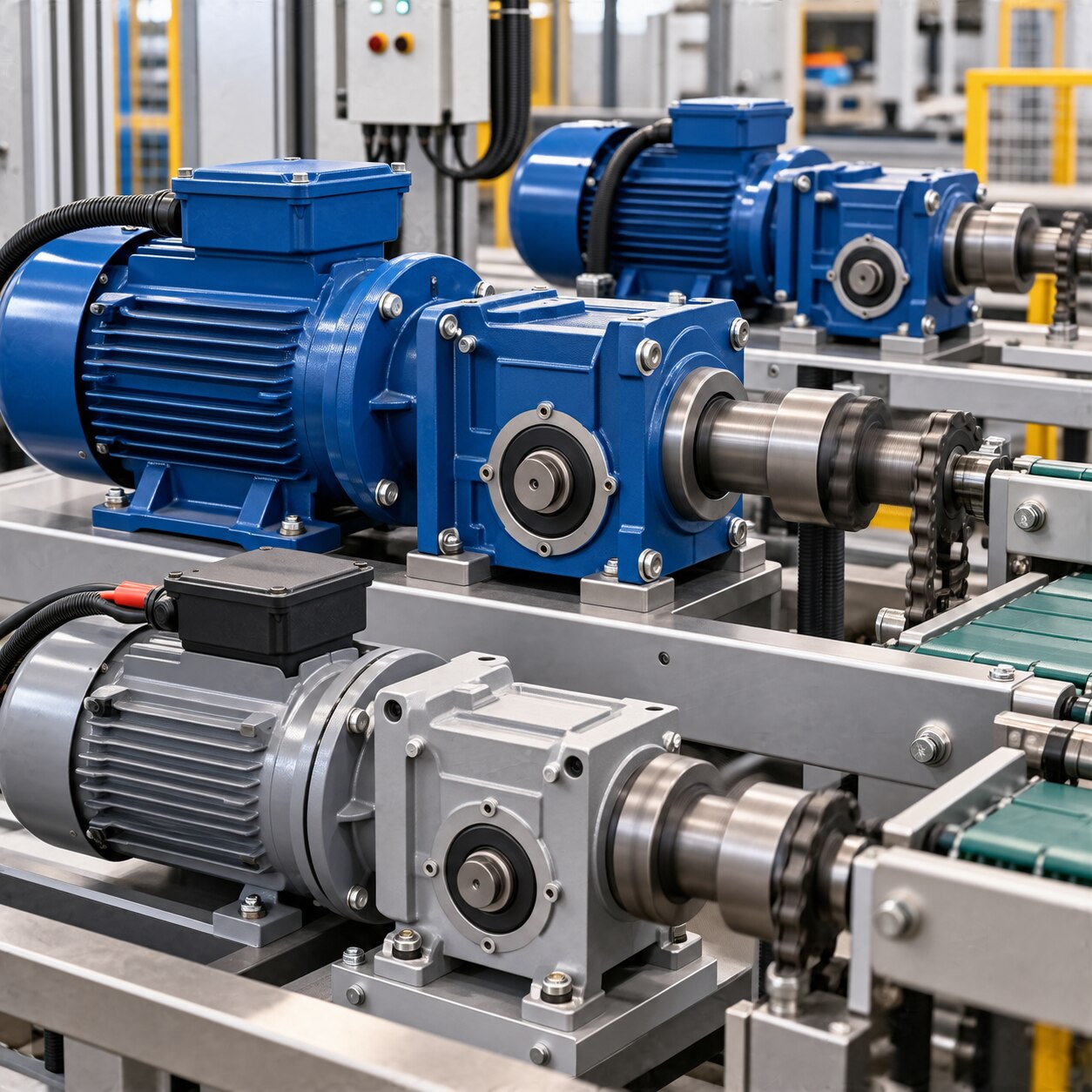
Dust, textile lint, metal particles, coolant and washdown water can turn a small geared motor fault into a production stoppage. By the end, you will have a maintenance schedule, safe test sequence, troubleshooting method and replacement checklist for AC and DC units working in Coimbatore conditions.
Key takeaways
- Record voltage, current, speed, ratio and temperature before diagnosing faults.
- Schedule AC and DC geared motor checks around their different failure modes.
- Trace faults from supply and wiring through the motor, coupling and gearbox.
- Compare repair, ratio change and compact geared motor replacement against actual load.
Set a baseline before dust, heat and load hide the fault
Safe inspection starts with isolation: disconnect the supply, discharge capacitors, apply lockout, prevent unexpected restart and guard the shaft before you remove covers or take measurements. Record the motor voltage, frequency, rated current, speed, gearbox ratio, duty cycle and ambient temperature, then repeat running measurements at a defined load.
- Log phase current for AC motors or armature current for DC motors, gearbox temperature, vibration, noise and backlash.
- Remove dust and textile lint with a vacuum or dry, low-pressure air; do not drive contamination into seals or bearings.
- Keep ventilation openings clear and shield the motor from coolant and washdown spray.
- Choose the enclosure, shaft seals, connectors and breather arrangement from the actual exposure. An IP rating does not prove chemical corrosion resistance.
| Reading or trend | Likely direction | What to investigate |
|---|---|---|
| Current at known load | Rising | Supply, winding, inverter, controller or increasing mechanical drag |
| Gearbox temperature | Rising at the same load | Lubricant, bearing, gear, alignment or overload fault |
| Noise, vibration or backlash | Increasing | Coupling, mounting, bearing, gear or shaft wear |
Compare measured temperature with the manufacturer’s winding-temperature or insulation-system limit and duty rating, not with what feels hot. Surface readings change with ambient temperature, airflow and emissivity.
On a VFD, check low-speed thermal performance: a shaft-mounted fan cools less as speed falls. Use independent forced ventilation, reduce torque or select a manufacturer-approved motor when required. This baseline makes AC/DC geared motor maintenance in Coimbatore more reliable than a single resistance reading.
Use separate preventive schedules for AC and DC geared motors
Run separate schedules: inspect shared mechanical risks on every shift or weekly round, then test AC electrical health and DC commutation on their own intervals.
1. At each shift or weekly check, inspect mounting bolts, coupling condition, shaft seals, cooling openings and terminal tightness. Record unusual noise, vibration, leakage and surface-temperature trend. A rising trend matters more than one reading.
2. At planned intervals, inspect bearings, gear teeth, backlash and shaft play. Confirm alignment, then compare radial and axial loads with the gearbox limits. Identify grease or oil lubrication; check the sight glass, level plug, leakage path and mounting orientation. Use only the gearbox maker’s specified lubricant, viscosity and additives.
Do not overfill a sealed unit or use automotive gear oil without confirming seal and additive compatibility.
3. For AC units, verify supply voltage, frequency, phase balance, winding continuity and insulation resistance. Isolate the motor and cable from a VFD before megohmmeter testing unless the drive maker explicitly permits it; test each separately at the specified voltage and compare results with the manufacturer’s limit.
4. For dc geared motor maintenance, measure brush length and spring pressure, and check seating, dust, grooving, burning and commutator eccentricity. Clean the commutator by the maker’s method, fit the specified brush grade, bed replacement brushes and inspect the armature. Check DC voltage at the motor, polarity, controller current limit and fault codes.
Trace the symptom from supply to gearbox before replacing parts
A reliable geared motor troubleshooting sequence moves from supply to controller, motor, gearbox and driven load. Record voltage, current, speed and temperature before dismantling; intermittent faults often vanish after the motor cools.
1. If it will not start, check supply voltage, fuse, controller enable, brake release and terminal tightness. Then test winding or armature continuity and check for a seized load.
2. For slow running, check low voltage, current limiting, incorrect frequency, excessive load and the selected ratio. Inspect DC brushes and commutator, then check for gearbox drag.
3. For speed fluctuation, test the controller for instability, inspect loose connectors and worn brushes, and check intermittent supply, encoder feedback and varying load. A DC motor sparking under load needs loaded terminal-voltage, current-limit, armature, commutator and mechanical-load checks before brush replacement.
4. For high current or repeated fuse and overload trips, measure voltage while loaded and check mechanical freedom. Inspect overload, misalignment, bearing seizure and shorted windings.
5. For overheating, check overload, blocked ventilation, excess oil, low-speed VFD operation and unsuitable insulation class or duty selection. Rumbling or load-dependent noise points toward bearings or gears; vibration points toward imbalance, loose mounting, bent shaft, coupling wear or misalignment.
6. Under lockout, uncouple the machine, turn the output by hand and inspect shaft play, coupling alignment and oil leakage. A damaged seal, blocked breather, excess pressure, wrong oil level, shaft runout or worn bearing needs correction; run unloaded only within safe limits.
Choose repair, ratio change or replacement from the real load
Repair a geared motor when its housing and shafts are sound; replace it when damage or unavailable parts make the repair uneconomic; change the drive arrangement when the motor cannot meet the real load or control requirement.
| Option | What to check | When it applies |
|---|---|---|
| Repair | Parts, seals, brushes and gears; sound housing and shafts; repair cost | 6 W to 200 W units with serviceable mechanical parts |
| Replace | Stripped teeth, burnt windings, cracked housing, severe shaft play, damaged bearings or unavailable parts | Damage threatens reliability or repair labour approaches replacement cost |
| Change drive | Motor type, controller compatibility, ratio, torque, thermal capacity and control objective | The existing arrangement cannot deliver the required speed, load or positioning |
Identify the motor as AC induction, permanent-magnet DC, brushed DC or electronically commutated. Match the controller to it: an AC controller does not run a DC motor, and a DC drive does not run an AC motor without the specified inverter or changeover.
Calculate output speed as motor speed divided by gear ratio. Then verify continuous and starting torque, duty cycle, starts per hour, shock load, service factor, thermal capacity, and allowable radial and axial shaft loads. Rated output torque is not the same as short-duration peak torque.
For a compact geared motor replacement, record:
- Nameplate voltage, frequency, current, power and speed
- Shaft diameter and length, key or flat, mounting holes, gearbox orientation and rotation
- Brake, encoder, connector, terminals, cable exit and overall envelope
Price opening a sealed gearbox, insulation testing, brush bedding, no-load current testing and loaded verification. Add a controller only when speed control suits the motor; choose a stepper or servo when positioning, holding torque or closed-loop feedback is the actual requirement.
Prepare a Coimbatore service brief and demand a complete quotation
Send the provider a complete service brief before anyone opens the gearbox. Include the nameplate photograph, motor and gearbox model, supply type, controller or VFD model, fault code, measured voltage and current, operating speed, load description, duty cycle, dust or washdown exposure, leakage photographs, coupling details, and baseline temperature, vibration and noise.
For ac geared motor repair in coimbatore, demand an itemised quotation covering:
- Bearing and seal replacement, rewinding, gear and shaft work, breather or lubricant work, controller testing, and alignment.
- Insulation-resistance testing, no-load current, loaded performance, test duration, parts warranty, and labour warranty.
- Root-cause findings, not only the failed part. A new seal will leak again if shaft runout or bearing wear remains.
| Service type | Require before approval | Failure prevented |
|---|---|---|
| AC motor on VFD | Test motor and cable separately; disconnect the drive unless its manufacturer explicitly permits megohmmeter testing | Drive-electronics damage from test voltage |
| DC geared motor | Confirm brush springs, correct brush grade, commutator cleaning or machining, armature checks, polarity, and controller fault diagnosis | Repeated sparking caused by load, voltage, armature, or controller faults |
| Compact geared motor replacement | Confirm output rotation, ratio, mounting dimensions, shaft geometry, controller compatibility, fit, torque, environment, and warranty | An undersized or incompatible replacement |
SSB INDUSTRIAL SOLUTIONS belongs in the comparison when you need a Coimbatore motion-control supplier, but score every quotation against the same technical brief. A compact geared motor replacement is incomplete until those confirmations are written down.
Related product
 | Compact Size Geared Motors 6W to 200W AC/DC geared motors, speed controller, variable speed motors, gear box ratio starts from 3 ratio to 180 ratio. View product → |
Frequently asked questions
What measurements should you record before servicing a geared motor?
Record motor voltage, frequency, rated current, speed, gearbox ratio, duty cycle and ambient temperature. Repeat running measurements at a defined load after safely isolating and inspecting the equipment.
How do AC and DC geared motor maintenance schedules differ?
AC geared motor maintenance focuses on supply quality, terminals, insulation, bearings, cooling and gearbox lubrication. DC geared motor maintenance also requires checks of brushes, commutator wear, brush pressure, armature connections and controller settings.
How should you troubleshoot a geared motor that runs hot or loses torque?
Start at the supply, then check wiring, protection, controller or drive settings, motor current, coupling alignment, brake operation and gearbox condition before replacing parts. Compare results with the recorded baseline.
When should you repair, change the ratio or replace a compact geared motor?
Repair when the motor, gears and housing remain serviceable. Change the ratio when speed or torque does not match the real load. Replace the unit when repeated faults, worn gears, damaged housing or inadequate thermal capacity make repair uneconomic.
What should a Coimbatore geared motor service quotation include?
Request the inspection findings, motor and gearbox specifications, fault diagnosis, parts list, labour, testing method, warranty, delivery time, exclusions and final price. Provide the service team with the machine duty cycle, load, operating environment and failure history.
Keywords