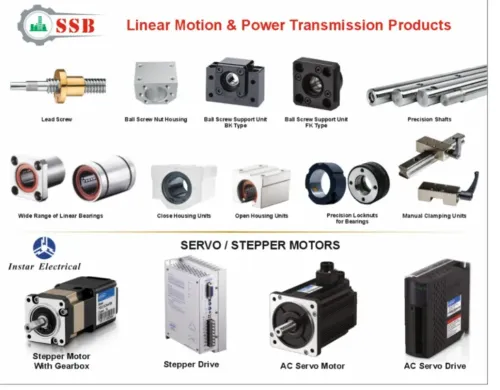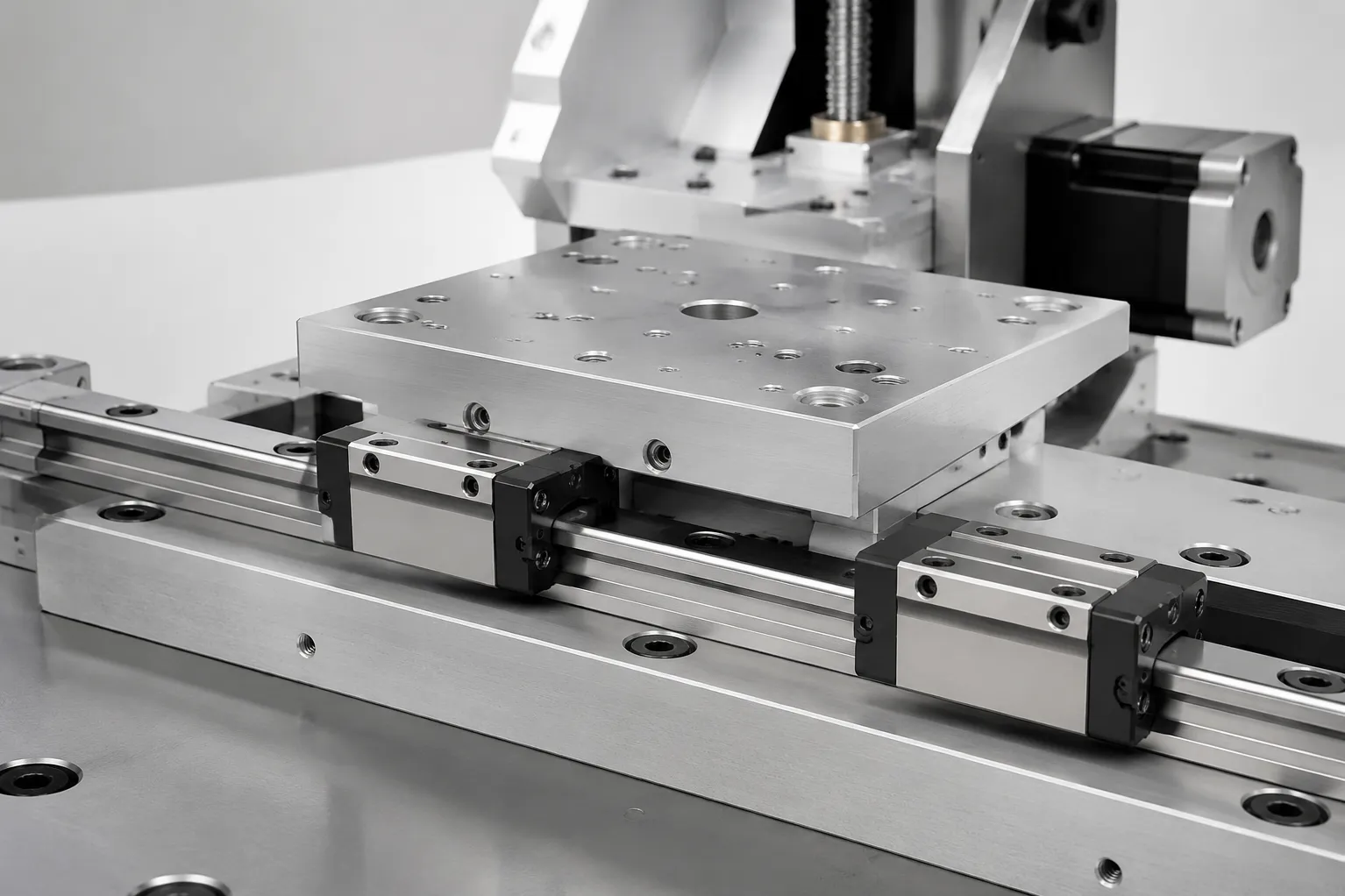
Industrial automation often involves repetitive movement that appears simple from the outside: a platform travels forward, a fixture returns to position, or an assembly moves along a shaft. Achieving that movement consistently depends on the components supporting it. A Linear Bearing for Precision Motion Applications is designed to allow controlled travel along a compatible linear shaft with relatively low friction.
For machine designers, understanding bearing selection is important because load, speed, shaft quality and alignment can all affect performance.
How Does a Linear Bearing Work?
A common linear ball bearing contains rolling elements that circulate as the bearing moves along a shaft.
Instead of allowing two surfaces to slide directly against each other, the rolling elements reduce friction and support smoother travel.
Depending on the design, linear bearings may be used in:
- Automated positioning mechanisms
- Packaging equipment
- Assembly machines
- Inspection systems
- Material handling equipment
- Industrial fixtures
- Special-purpose machinery
Different applications place different demands on the bearing, so nominal bore diameter alone is not enough for selection.
Bearing and Shaft Compatibility
A linear bearing operates as part of a system.
The shaft provides the running surface, while the bearing supports and guides the moving assembly. Surface condition, dimensional accuracy and hardness of the shaft can therefore influence bearing behaviour.
A worn or damaged shaft can compromise a replacement bearing even if the new bearing itself is correctly specified.
When troubleshooting an existing machine, inspecting both components is often more useful than replacing the bearing in isolation.
Load and Orientation Need Attention
Bearing load is influenced by more than the mass of the moving component.
Mounting orientation, acceleration, external forces and load position can change the forces experienced during operation.
Engineers should therefore evaluate:
- Expected radial load
- Dynamic operating forces
- Number of bearings sharing the load
- Shaft support arrangement
- Travel speed
- Duty cycle
This becomes particularly important in machines operating continuously or performing frequent acceleration and deceleration cycles.
Why Alignment Problems Cause Trouble
A common source of poor linear movement is misalignment.
When two shafts are not sufficiently parallel, the bearings attached to a shared carriage may experience additional resistance. The machine may show inconsistent movement, noise, vibration or premature component wear.
Increasing motor power does not correct the underlying geometry.
The better approach is to check shaft alignment, mounting accuracy and structural rigidity.
Maintenance Should Be Designed In
Industrial components often become difficult to maintain because accessibility was not considered during machine design.
Where lubrication is required, the bearing should remain reasonably accessible. Contamination should also be controlled through suitable seals or machine guarding.
In dusty or debris-prone environments, routine inspection can identify shaft damage, lubricant deterioration or contamination before these issues significantly affect movement.
Precision Without Unnecessary Over-Specification
For manufacturers in Coimbatore, selecting components with the highest available specification is not always the most efficient approach.
A general transfer mechanism and a high-accuracy measuring machine may require very different motion components.
SSB Industrial Solutions works with machine manufacturers, procurement teams and automation integrators in Coimbatore and wider Tamil Nadu on industrial motion component requirements.
When evaluating a Linear Bearing for Precision Motion Applications, it helps to define the machine's real performance needs first: load, travel, speed, operating environment, expected life and required repeatability.
A well-matched bearing and shaft arrangement can provide reliable linear guidance without introducing unnecessary complexity. The important principle is straightforward: precision comes from the complete mechanical system, not from one high-specification component used in isolation.
Keywords