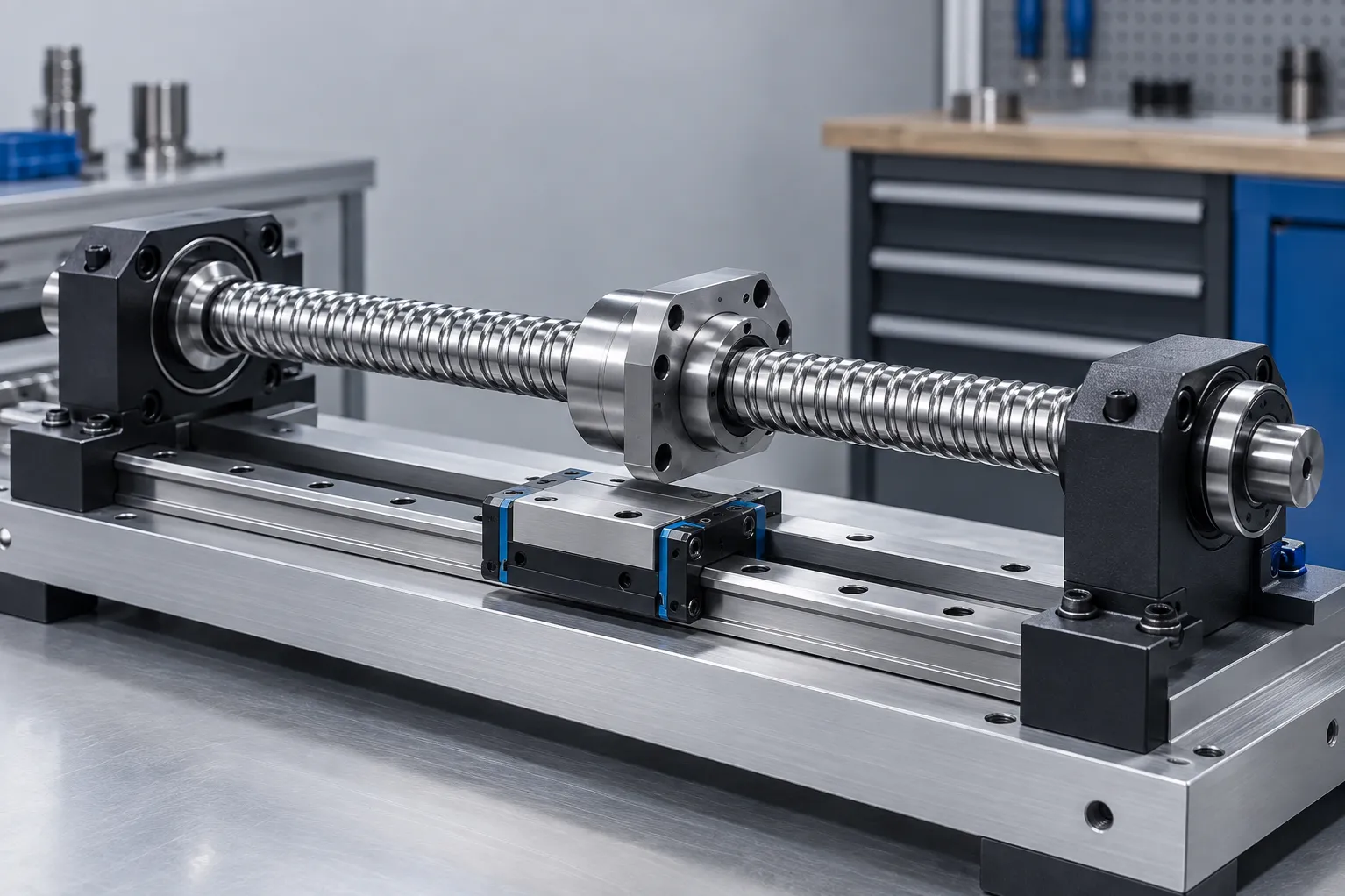
Converting motor rotation into accurate linear movement is a fundamental requirement in automation. A Single Nut Ball Screw for Linear Motion provides one widely used solution by combining a precision screw shaft with a ball nut containing recirculating rolling elements.
The system can deliver efficient mechanical transmission, but choosing the correct ball screw requires more than matching shaft diameter to available space.
Start With Load Requirements
The first question should be what the ball screw needs to move.
The load includes the moving assembly as well as forces generated by acceleration, process operations and machine orientation. A vertical axis, for example, creates considerations that differ from a horizontal positioning axis.
Engineers should establish the expected axial load and duty cycle before selecting a screw.
This helps determine whether the proposed diameter and nut arrangement are appropriate.
Lead Determines More Than Travel Speed
Ball screw lead is the linear distance travelled by the nut for each screw revolution.
A larger lead can produce more linear travel per revolution, while a smaller lead changes the relationship between motor rotation and linear movement.
Selection should account for:
- Required axis speed
- Motor speed
- Desired positioning behaviour
- Available drive torque
- Machine cycle time
Choosing lead only according to maximum speed can create problems elsewhere in the drive system.
Consider Accuracy Requirements Realistically
Not every machine requires extremely high positioning accuracy.
An automated transfer station, general-purpose machine and precision machining axis can have very different expectations.
The required ball screw specification should therefore be linked to the application's positioning tolerance and repeatability.
Over-specification can raise acquisition costs without providing a useful production advantage. Under-specification can limit the machine's ability to achieve its intended performance.
Unsupported Length and Speed Matter
A ball screw rotates, which means shaft length, diameter, support configuration and rotational speed interact.
At unsuitable operating conditions, a long rotating screw may become vulnerable to vibration or critical-speed issues.
Designers should evaluate the proposed screw length and support arrangement against expected operating speed rather than assuming any shaft can safely run at the motor's maximum RPM.
Single Nut or Another Nut Arrangement?
A single nut arrangement can be suitable for many industrial motion applications where its backlash, load and rigidity characteristics meet the machine requirements.
Applications demanding tighter backlash control or different preload characteristics may require another arrangement.
The decision should therefore be based on actual performance requirements rather than the assumption that one configuration is universally superior.
Do Not Ignore End Supports and Couplings
A ball screw is only one part of the drive train.
Its performance can be influenced by:
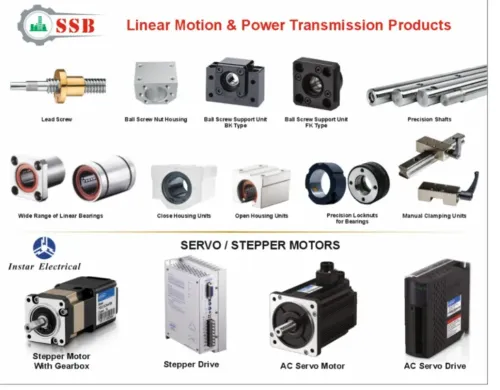
- Fixed and support-end bearings
- Bearing housings
- Motor coupling
- Nut housing
- Alignment
- Motor selection
- Machine structure
Poor alignment between the screw and guideway can create unwanted loading even when every individual component is correctly specified.
Buying for Machinery in Coimbatore
Coimbatore's machine-building ecosystem includes textile machinery, special-purpose equipment, automotive-related manufacturing and numerous automation applications.
For procurement managers sourcing a Single Nut Ball Screw for Linear Motion, providing complete technical information can make component evaluation considerably more effective.
Useful information includes diameter, lead, travel, total shaft length, load, speed, mounting arrangement and accuracy requirement.
SSB Industrial Solutions works with industrial customers in Coimbatore and across Tamil Nadu on linear-motion and automation component requirements.
For replacement projects, identifying the existing screw specifications and installation dimensions is particularly important. For new designs, selection should begin with machine performance rather than an existing catalogue number.
A ball screw that is correctly integrated with the motor, supports, guideways and machine frame can contribute to consistent linear movement while keeping the overall drive arrangement mechanically efficient.
Keywords