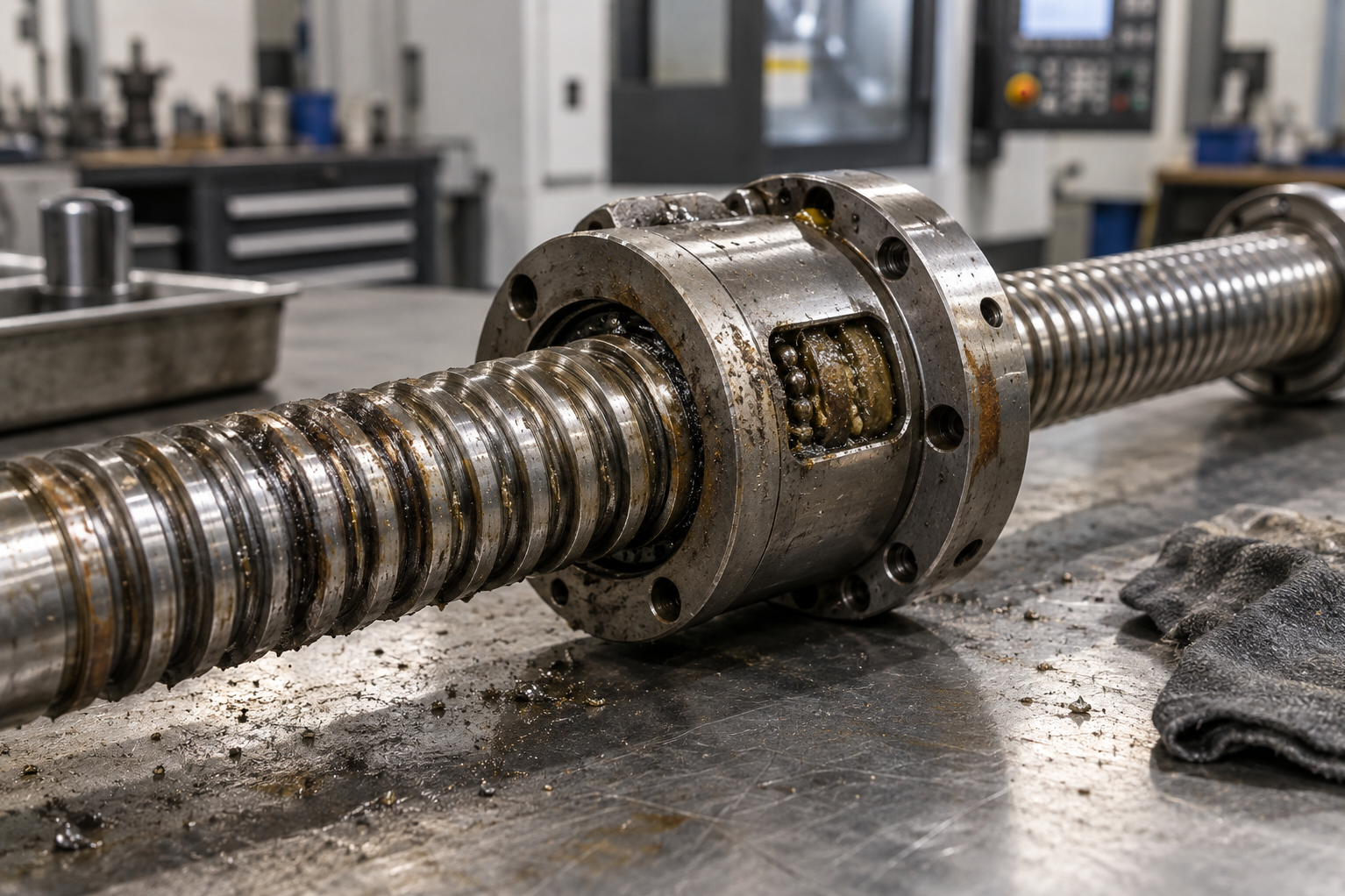
A Rolled Ball Screw for Industrial Motion Systems can provide efficient linear movement across many automated machines. When an axis begins producing noise, vibration, inconsistent positioning or premature wear, however, replacing the screw immediately may not solve the problem.
Many ball screw issues originate from installation, lubrication, alignment or operating conditions elsewhere in the machine.
Misalignment Between Screw and Guideways
Ball screws are intended primarily to transmit axial force. They should not be forced to compensate for poor machine geometry.
If the screw axis and linear guide system are misaligned, the ball nut may experience unwanted forces as it travels.
Possible symptoms include:
- Uneven running resistance
- Abnormal noise
- Higher motor load
- Localized wear
- Reduced service life
Alignment should therefore be checked before assuming the ball screw itself is defective.
Incorrect End-Support Installation
The screw's fixed and supporting ends influence rotational stability.
Improper bearing installation, unsuitable preload or loose mounting can create movement that affects axis behaviour.
When troubleshooting, engineers should inspect the complete support arrangement, including bearing condition, housings and fastening.
A new screw installed into a faulty support system can quickly develop similar symptoms.
Poor Lubrication
Ball nuts contain recirculating rolling elements and require suitable lubrication according to their design and operating conditions.
Insufficient lubrication can increase friction and wear. Contaminated lubricant can introduce particles into the rolling contact areas.
Maintenance teams should establish a practical lubrication schedule based on machine usage and environmental conditions rather than relying on an indefinite factory lubrication assumption.
Contamination Entering the Motion System
Coimbatore manufacturing facilities can involve metal chips, textile lint, dust, coolant and other process contaminants depending on the industry.
Where the ball screw is exposed, suitable protection can become important.
Options may include:
- Bellows
- Covers
- Wipers
- Enclosures
- Regular cleaning procedures
Protection should be selected according to the actual environment rather than applied uniformly to every machine.
Operating Beyond Intended Speed or Load
A ball screw that performs correctly at one operating condition may behave differently after a machine's production speed is increased.
Higher acceleration can increase dynamic loads. Higher screw RPM can also introduce rotational considerations, particularly on longer shafts.
Whenever production parameters are changed substantially, the motion system should be reviewed rather than assuming the original design retains unlimited operating margin.
Incorrect Component Selection
A Rolled Ball Screw for Industrial Motion Systems should be chosen based on more than diameter.
Lead, shaft length, load rating, accuracy, operating speed and nut configuration all contribute to suitability.
Using an available screw because it fits the machine envelope can create performance limitations that appear later during production.
A Practical Troubleshooting Sequence
Before replacing a problematic ball screw, check:
- Lubrication condition
- Visible contamination or damage
- Screw and guideway alignment
- End-support bearings
- Coupling condition
- Motor mounting
- Ball nut mounting
- Actual operating load and speed
- Axial play where relevant
- Machine structural condition
This systematic approach can distinguish component wear from an installation problem.
SSB Industrial Solutions works with industrial customers and machine builders in Coimbatore and wider Tamil Nadu on motion component requirements for automation and machinery.
When a replacement is needed, sharing existing dimensions, lead, travel, support arrangement and operating conditions helps establish a more appropriate specification.
A rolled ball screw can provide dependable industrial motion when the surrounding system allows it to operate as intended. Good alignment, suitable lubrication and realistic loading are therefore just as important as choosing the screw itself.
Keywords